
There are many different types of industrial fluid pumps – from liquid pumps to solids pumps, and designed for many different viscosities. The right solution depends on the exact fluid, your application, and your operating conditions.
Kerr Pump & Supply can help you evaluate your application and determine which pump technologies may be the best fit. Our Sales Engineers can discuss available options, advantages, disadvantages, and manufacturer solutions based on your specific requirements.
Which Pump Type Is Right for Your Application?
Different pump technologies are better suited to different fluids and operating conditions. This quick comparison can help identify technologies worth considering before reviewing specific pump models and manufacturers.
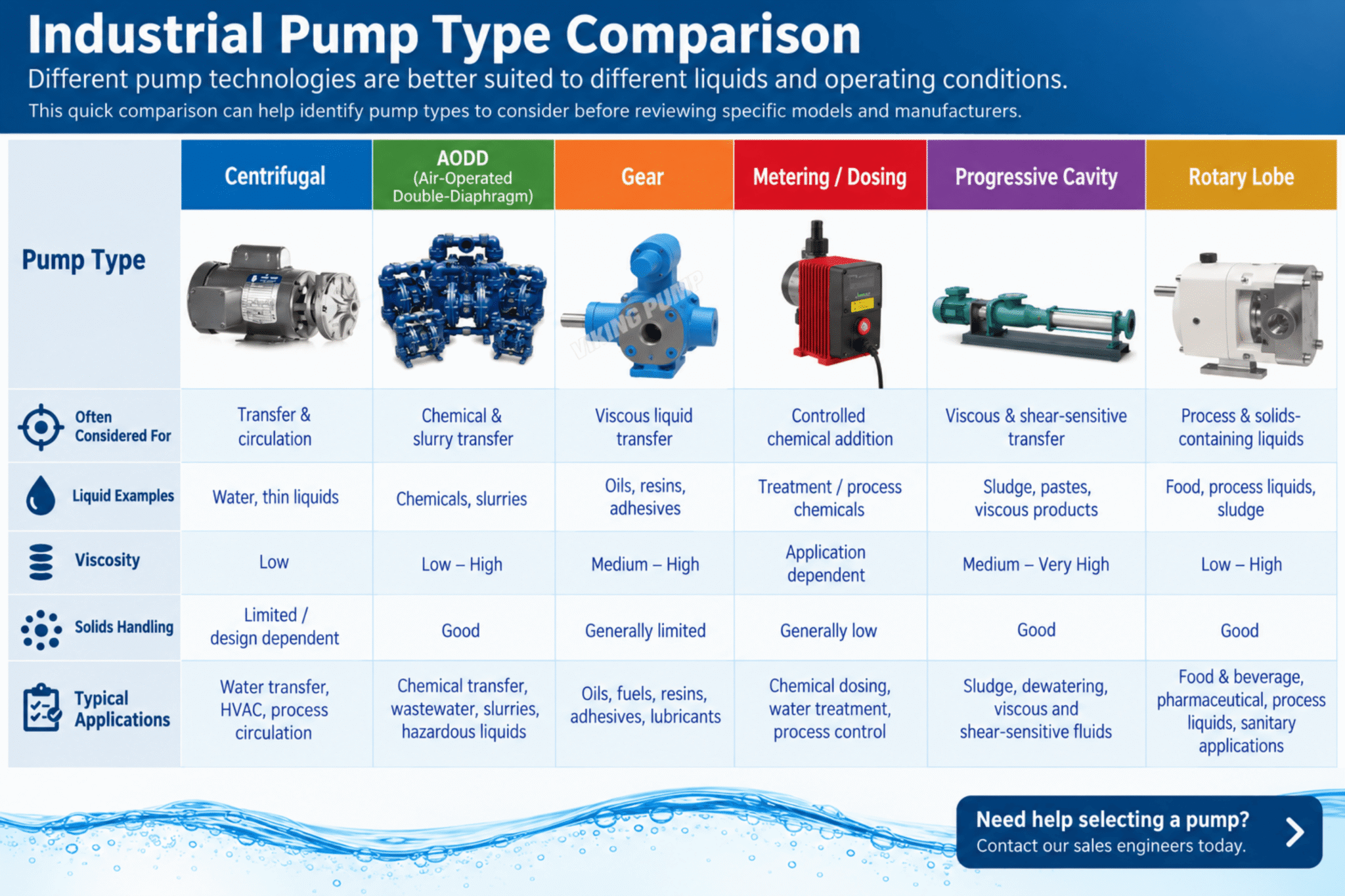
This chart is intended as a general starting point. Final pump selection depends on the liquid, flow, pressure, temperature, viscosity, materials of construction, installation conditions, and other operating requirements.
Featured Pump Solutions
Not sure where to start? Explore six common industrial pump technologies based on the liquid you need to move and your application.
Centrifugal Pumps
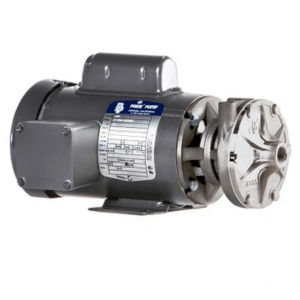
For liquid transfer and circulation
Centrifugal pumps use a rotating impeller to move liquid through a system. They are commonly used for water transfer, HVAC, process circulation, and other applications involving water and thinner liquids.
Air-Operated Diaphragm Pumps
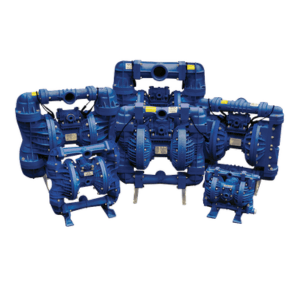
For chemical and slurry transfer
AODD pumps use compressed air to transfer liquids and can accommodate a wide range of chemicals, slurries, solids, and demanding industrial applications.
Positive Displacement
For oils, resins, and viscous liquids
Gear pumps use rotating gears to move consistent volumes of liquid. They are commonly considered for oils, fuels, resins, adhesives, lubricants, and other medium- to high-viscosity liquids.
Metering & Dosing Pumps
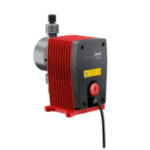
For controlled chemical addition
Metering pumps deliver controlled amounts of liquid into a process. They are ideal for chemical dosing, water treatment, and process-control applications where accuracy and repeatability matter.
Progressive Cavity Pumps
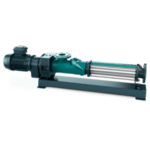
For viscous and shear-sensitive transfer
Progressive cavity pumps move liquid through a sequence of sealed cavities, producing steady, low-pulsation flow. They are often considered for sludge, pastes, viscous products, and liquids that benefit from gentle handling.
Rotary Lobe Pumps
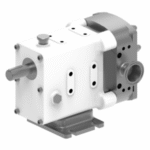
For solids-containing process liquids
Rotary lobe pumps use synchronized lobes to move liquid with gentle, positive-displacement action. They are commonly considered for food, process liquids, sludge, sanitary applications, and liquids containing suspended solids.
PUMP MANUFACTURERS & RESOURCES
Looking for a specific pump manufacturer, product line, or repair solution?
Explore Kerr Pump & Supply’s pump manufacturers, line cards, and repair services to learn more about available equipment and solutions.

Need Help Selecting the Right Pump?
Choosing the right pump depends on many factors. Kerr Pump & Supply’s Sales Engineers can help evaluate your application and narrow down the available options.
Information That Can Help Us Evaluate Your Application:
- Liquid name and concentration, if applicable
- Required flow rate
- Discharge pressure or total head
- Operating temperature
- Viscosity
- Solids content and approximate particle size
- Available power
- Installation conditions
- Existing pump manufacturer and model, if replacing equipment
Don’t Have Every Specification?
That’s okay. Tell us what you know, and we’ll help you determine the next steps.
Explore Fluid Pump Types
Air Operated Double Diaphragm Pumps (AODD) can handle water to 90 percent solids and used mostly in industries like water treatment or food processing.
ANSI pumps are centrifugal pumps that are horizontal, end suction, single stage that are comparable in size and identical in interface and envelope dimensions regardless of manufacturer.
Booster pumps increase the pressure of a fluid may be used for increasing gas pressure, transferring high pressure gas, charging gas cylinders and scavenging.
Canned Motor Pumps have an electric motor where the rotor winding is encapsulated and is immersed in liquid and the rotor shaft has the impeller at the end.
Centrifugal pumps operate by having the fluid enter the pump impeller along the rotating axis, being accelerated by the impeller, flowing radially out into the diffuser or volute chamber, where the fluid exits.
Chemical pumps like the name suggests, carry chemicals and are resistant to corrosive and abrasive liquids.
Circumferential piston pumps have two displacement pumps that are able to transport very low viscosity liquids at high discharge pressure for food, dairy, beverage and other hygienic applications.
Condensate units are used to pump the condensate produced in an HVAC, refrigeration, condensing boiler furnace or steam system.
De-aerators are most often used to remove oxygen and other dissolved gases from the feed water to steam generating boilers.
De-watering pumps remove water from solid material by a solid liquid separation processes.
Drum pump is used for barrels, tanks, IBCs and drums that contain liquids that are too heavy for tipping over to empty.
Engine driven pumps are pressure compensated, variable displacement axial piston pump capable of varying volumes of fluid delivered to maintain hydraulic system pressure.
End suction pumps are the most common types of centrifugal pumps. Usually single stage pumps and are the most affordable type of centrifugal pumps. They have a casing with the suction coming in one end and the discharge coming out the top.
External gear pumps are used as lubrication in the pump engines and provide more precise measurements of liquid going through the pump and greater flow control and are run quietly.
Fire pump intakes are either connected to public water supply piping or a static water source and provide water at a higher pressure.
Grinder pumps finely grind sewage and pump it into elevated destinations.
Internal gear pumps are the same as an external gear pump except it uses both internal and external gears.
Jockey pump is a small pump connected to a fire sprinkler system to maintain pressure in the sprinkler pipes.
Magnetic Drive centrifugal pump has the wet end and motor as two separate contained parts connected by only a motor bracket. A drive magnet is attached at the end of the motor shaft and the magnet rotates in synchronization with the impeller that is fixed on another magnet.
Metering pumps allow for fluid metering during the process flow to control exact quantities especially in fluid dosing applications.
Plunger / Piston Pump is a type of displacement pump where the seal reciprocates with the piston while a plunger pump is where the seal is stationary and a smooth cylindrical plunger slides through the seal.
Propeller pump is a high flow, low lift impeller type device that features a linear flow path and it can installed vertically, horizontally and angled orientation and has the motor above the water level with the impeller below.
Process pumps are used to move fluids and has many types depending on application. Can be used to pump corrosive or abrasive fluids.
Progressive Cavity pumps transfer fluid through the pump in a sequence of small fixed shape cavities as the rotor turns.
Pump transfer stations are holding or processing sites for temporary deposition of waste.
Regenerative pumps fill the need between centrifugal and positive displacement designs that combines both the high discharge pressure of displacement types with the flexible operation of centrifugals.
Rotary Lobe pumps reverse flow direction at any time can run dry for long periods of time can handle solid objects, and highly viscous liquids.
Sand, Sludge, Slurry pumps are for large quantities of water that contains hard and soft solids like mud, sand and sludge. They are also portable.
Self-priming pumps are designed to lift water from a certain level below the pump suction without having to fill the suction piping with liquid. The air/water separation is what makes the self-primer unique. Some are capable of handling solids along with liquids.
Sewage pumps are used to move solids and liquids between locations uphill and will typically sit in a sewage basin.
Shredder pumps are used to shear down debris that could cause clogs before pumping.
Split case pumps allow for the rotor to be removed without moving the motor, less shaft deflection, higher efficiency and high nozzle loads.
Submersible pump is hermetically sealed motor close coupled to the pump body. It prevents pump cavitation which is caused by high elevation difference between pump and the fluid surface.
Sump pump is used to remove water that has accumulated in a water collecting sump basin.
Turbine pumps use impellers with radially oriented teeth that move the fluid and are preferred in applications where high head, low flow, and compact design are desired.
Vane pumps operate with low flow pulsation and make them quiet while still having high speed. They also can be used with different levels of viscosity
Vertical pumps utilize a shaft and bearing support that allows the volute to hang in sump while the bearings are outside the sump. Vertical Multi-stage pumps contain two or more impellers.
Vertical seal-less centrifugal pump has the impeller shaft contained in a sealed pressurized containment shell that contains the process fluid. Leakage is prevented by the use of static sealing technology.
Frequently Asked Questions About Industrial Pumps
What is the difference between centrifugal and positive displacement pumps?
Centrifugal pumps add energy to liquid with a rotating impeller. Positive displacement pumps trap liquid and move it through the pump in repeated volumes. The appropriate technology depends on the liquid and the system’s operating requirements.
Can one pump handle different liquids?
Sometimes. Each liquid should be evaluated against the pump’s materials, seals, operating limits, and performance characteristics. A pump suitable for one chemical or viscosity may not be suitable for another.
What information should I provide when replacing a pump?
Provide the manufacturer, model, nameplate information, liquid being pumped, and operating requirements when available. It is also helpful to describe any recurring problems with the existing pump so the replacement can be evaluated against the actual application.
How do I know which industrial pump type I need?
Start with the liquid being pumped and the job the pump needs to perform. Flow rate, pressure, temperature, viscosity, solids, chemical compatibility, installation conditions, and available power can all affect pump selection. Kerr Pump & Supply can help evaluate these requirements and discuss suitable pump technologies.
Can Kerr Pump & Supply help replace an existing pump?
Yes. Providing the existing manufacturer’s name, model, nameplate information, and operating conditions can help Kerr evaluate replacement options. Information about performance issues with the current pump can also be useful.
Need Help With Your Pump Application?
Whether you’re replacing an existing pump, troubleshooting an application, or selecting equipment for a new system, Kerr Pump & Supply’s experienced team can help you evaluate your options and determine the next steps.