Estimated reading time: 5 minutes
When a vacuum pump fails, it’s rarely sudden—it’s usually the result of overlooked maintenance, contamination, or degraded oil performance. One of the most critical yet underestimated factors in vacuum pump performance and reliability is vacuum pump oil. The right vacuum pump lubricant doesn’t just lubricate—it protects, cools, seals, and ultimately determines how long your equipment will last.
If your goal is to reduce downtime, improve vacuum performance, and extend pump life, understanding the role of industrial vacuum pump oil is essential.
Why Vacuum Pump Oil Quality Directly Impacts Performance
Vacuum pump oil is not just a lubricant—it directly affects system efficiency, operational reliability, and pump longevity.
When oil degrades or is improperly selected, it can no longer:
✔ Maintain proper sealing for vacuum pressure
✔ Dissipate heat effectively
✔ Prevent internal wear
✔ Resist contamination and sludge buildup
This leads to:
- Loss of vacuum efficiency
- Increased operating temperatures
- Accelerated component wear
- Higher maintenance costs and unexpected downtime
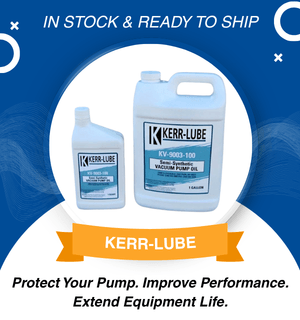
High-quality oil—like Kerr-Lube vacuum pump oil —provides:
✔ Improved thermal and oxidative stability
✔ Longer service life under demanding conditions
✔ Reduced sludge and varnish formation
✔ More consistent vacuum performance
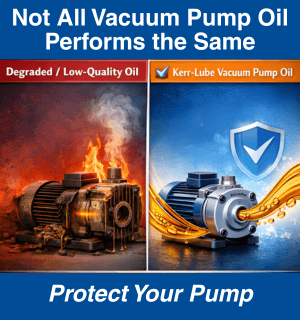
What Happens If You Use the Wrong Vacuum Pump Oil?
Using the wrong vacuum pump oil leads to poor sealing, overheating, and accelerated wear—ultimately reducing performance and increasing the risk of failure.
When to Change Vacuum Pump Oil (Don’t Wait for Failure)
Waiting until oil shows visible signs of failure can already mean reduced performance or internal damage.
Best practice: Follow a consistent oil change schedule based on operating conditions—not just symptoms.
Watch for warning signs, including:
✔ Oil discoloration or darkening
✔ Reduced vacuum performance
✔ Increased operating temperature
✔ Presence of moisture or contaminants
However, even if these signs aren’t present, routine oil changes are critical—just like regular oil changes in your car—to maintain performance and prevent long-term damage.
Operations with heavy loads, heat, or contamination may require more frequent changes to protect equipment.
How the Right Oil Extends Pump Life
Choosing a high-quality vacuum pump oil directly impacts pump longevity and overall system efficiency.
Benefits of Using Premium Vacuum Pump Oil:
✔ Longer service intervals – Less frequent oil changes
✔ Reduced downtime – Fewer unexpected failures
✔ Improved system efficiency – Consistent vacuum performance
✔ Lower maintenance costs – Less wear and fewer repairs
Kerr-Lube, for example, is specifically designed to handle demanding industrial environments, helping operators maintain reliability while reducing operational costs.
Applications Where Oil Performance Is Critical
Vacuum pump oil becomes even more important in industries where contamination, heat, or continuous operation are factors.
Common Applications Include:
- Food processing
- Chemical processing
- Plastics and thermoforming
- Packaging systems
- Medical and laboratory environments
In these settings, oil must maintain performance under stress, making formulation and quality critical.

Prevent Failures with Proactive Oil Management
The best way to protect your vacuum pump is through proactive oil maintenance.
Best Practices:
✔ Use manufacturer-recommended oil
✔ Monitor oil condition regularly
✔ Replace oil at proper intervals
✔ Address contamination early
Some operations even benefit from oil analysis programs, which help detect issues before they lead to failure.
Kerr Pump offers a free oil sampling program to identify issues early and optimize oil change intervals.
How to Choose the Right Vacuum Pump Oil
Choosing the right vacuum pump oil depends on your equipment, application, and operating conditions.
Key Factors to Consider:
✔ Pump type (rotary vane, liquid ring, dry claw)
✔ Operating temperature
✔ Exposure to moisture, chemicals, or contaminants
✔ Manufacturer specifications
✔ Required viscosity (e.g., ISO 100)
Selecting the correct oil ensures optimal performance, longer equipment life, and fewer maintenance issues.
Final Takeaway: Oil Is Not Just Maintenance—It’s Protection
Vacuum pump oil plays a direct role in system performance and equipment life.
The right oil—and proper maintenance—helps you:
✔ Prevent downtime
✔ Extend equipment life
✔ Maintain consistent performance
✔ Reduce long-term costs
Ignoring oil quality doesn’t just impact maintenance—it increases the risk of failure.
Not Sure If Your Vacuum Pump Oil Is Protecting Your Equipment?
Get expert guidance to improve performance, reduce downtime, and extend pump life.
Key Takeaways
- Vacuum pump oil failure often stems from overlooked maintenance, contamination, or degraded oil quality.
- High-quality oil directly impacts vacuum performance, equipment life, and reduces maintenance costs.
- Using the wrong oil leads to poor sealing, overheating, and increased wear, which jeopardizes performance.
- Regular oil changes and proactive oil management are crucial to prevent downtime and enhance equipment reliability.
- Choosing the right vacuum pump oil ensures optimal performance and longevity, significantly reducing long-term costs.
Sources: Pumps & Systems — “Extending Compressor and Vacuum Pump Drain Intervals Using Lubricating Fluid Chemistry”; “Maintaining Rotary Vane Vacuum Pumps.” Kerr Pump & Supply product and technical resources.